
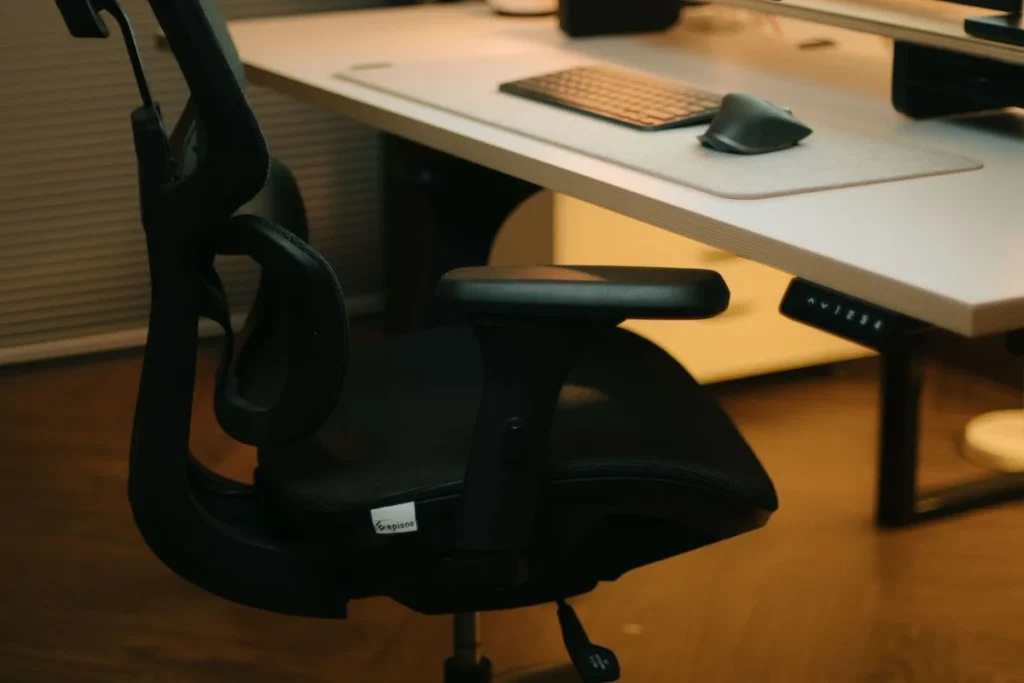
Mesh vs Leather Office Chair: Which Is Better for Long Days?
Mesh office chairs win for breathability and long-day comfort in warm rooms — body heat escapes through the weave instead of pooling under you. Genuine leather wins for durability and a premium executive look that ages gracefully over a decade or more. Choose mesh if you run hot or sit 8-plus hours daily; choose leather if you want one chair for the long haul and a classic office look.
As an Amazon Associate I earn from qualifying purchases.
Mesh vs Leather: Which Wins Overall?
No single material wins every category. The table below condenses how we compared mesh and leather across the six factors that matter most for long workdays, based on specs and owner feedback as of November 2026.
| Factor | Mesh | Leather | Winner |
|---|---|---|---|
| Breathability | Heat passes through the weave; runs noticeably cooler in warm rooms | Solid surface traps heat and moisture against your body | Mesh |
| All-day comfort | Tensioned suspension distributes weight evenly; firm feel | Thick padding cushions pressure points; softer feel | Tie — comes down to feel preference |
| Durability | Quality mesh lasts 5–8 years of daily use before sagging | Genuine leather lasts 10–15 years; bonded leather cracks in 2–4 | Genuine leather (but mesh beats bonded) |
| Cleaning and maintenance | Vacuum dust; spot-clean spills before they soak in | Wipe spills in seconds; genuine leather needs conditioning 2–4 times a year | Leather |
| Price | Solid ergonomic mesh chairs start around $180 | Bonded leather starts around $200; genuine leather starts around $900 | Mesh for value |
| Looks | Modern, sporty, startup-office aesthetic | Classic executive look; develops a patina over time | Subjective |
Quotable: mesh is the cooling, value-focused choice; genuine leather is the buy-it-for-a-decade choice; bonded leather — the kind on most $200–$400 executive chairs — is the worst of both worlds on durability.
Which Is Better for Long Sitting Days?
For pure sitting endurance, the material matters less than the ergonomics — lumbar support, seat-depth adjustment, and the ability to recline and change posture. That is the consistent message from ergonomics authorities: OSHA’s ergonomics guidance emphasizes adjustable, well-fitted seating and posture changes over any single chair feature, and the Mayo Clinic’s office-ergonomics guide similarly stresses chair height, back support, and regular movement breaks rather than upholstery type.
That said, the material does change how hour six feels:
- Mesh chairs like the Herman Miller Aeron use a tensioned suspension seat that spreads your weight across the weave. There is no foam to compress, so the chair does not develop a “butt groove” over time — but the firm, hammock-like feel is not for everyone, and bony sitters sometimes find mesh seats uncomfortable after a few hours.
- Leather (and leather-like) chairs rely on thick foam padding over a solid base. That padding feels plusher at first — many owner reviews describe the first month of a padded leather executive chair as more comfortable than any mesh chair. Over years, though, foam compresses, and bonded leather surfaces crack and peel, which ruins the look even when the padding underneath is still fine.
The practical takeaway: if you sit 8 or more hours a day, prioritize adjustability (lumbar, armrests, seat depth, recline lock) over the mesh-vs-leather question itself. A well-adjusted mesh chair and a well-adjusted leather chair both beat a poorly adjusted chair of either type. If you are still choosing between chair categories, our guide on how to choose an ergonomic office chair walks through the features that matter most.
Is Mesh or Leather Better for Hot Rooms and Sweating?
Mesh — and it is not close. This is the single biggest comfort difference between the two materials, and it is pure physics: a woven mesh back and seat let air circulate, while a solid leather surface traps heat and moisture between your body and the chair.
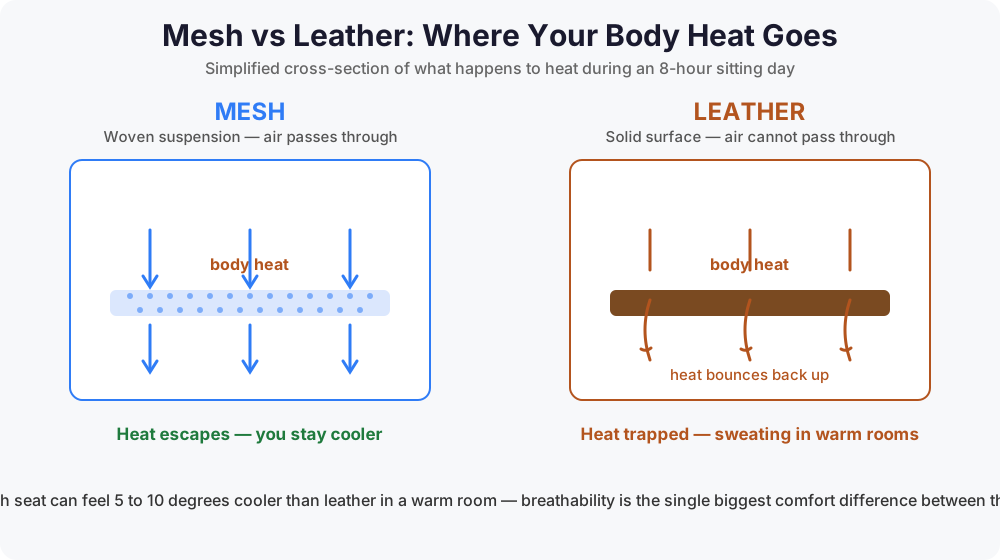
Owner reviews consistently report that mesh feels noticeably cooler — a mesh seat can feel 5 to 10 degrees cooler than leather in a warm room. Leather chairs, meanwhile, earn the classic summer complaints: a sticky back on video calls, sweat marks on the seat, and that uncomfortable peeling-off-the-chair moment when you stand up.
Leather does fight back in one climate scenario: cold rooms. A mesh chair in a chilly home office in winter can feel drafty against your back, while leather feels warm and insulating from the first minute. If your workspace runs cold year-round, that flips the advantage.
The bottom line: if your office hits 75°F (24°C) or more during the day, or you tend to sweat while sitting, mesh is the clear pick. If your room is climate-controlled and cool, the temperature question barely matters.
Which Material Lasts Longer: Mesh, Genuine Leather, or Bonded Leather?
This is where most shoppers get tripped up, because “leather office chair” usually does not mean leather at all. There are three different things hiding under that label:
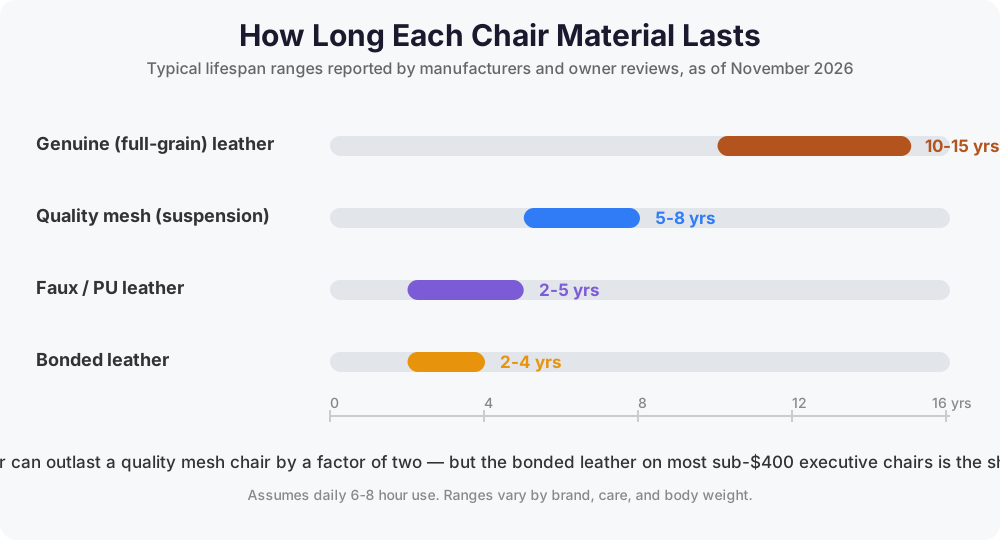
Genuine (full-grain or top-grain) leather is the durability champion. With basic conditioning, it resists cracking for 10–15 years of daily use and develops a patina that many people find more attractive with age. The catch is price: a genuine leather executive chair from a reputable brand starts around $900 and climbs past $2,000. Below that price point, you are almost certainly not buying genuine leather.
Quality mesh (suspension mesh like Herman Miller’s Pellicle, or the elastomer mesh on good mid-range chairs) typically lasts 5–8 years of daily 6–8 hour use before it starts to sag or lose tension. Mesh does not crack or peel, and it resists stains better than fabric — but a saggy mesh seat is not repairable, so when it goes, the chair is done.
Bonded leather — ground-up leather scraps glued to a polyurethane backing — is the material on most $200–$400 “leather” executive chairs. Owner reviews consistently report the same failure pattern: the surface starts flaking and peeling after 2–4 years, often beginning on the armrests and seat edges. The chair’s frame and padding may be perfectly fine, but it looks ruined.
Faux (PU) leather sits between mesh and bonded on lifespan, around 2–5 years, with a similar peeling failure mode but usually at a lower price that makes the shorter life easier to swallow.
Quotable: genuine leather can outlast a quality mesh chair by a factor of two — but the bonded leather on most sub-$400 executive chairs is the shortest-lived option of all. If durability is your priority and your budget is under $500, a well-built mesh chair will outlast any bonded-leather chair at the same price.
Which Is Easier to Clean and Maintain?
Leather wins on spill cleanup; mesh wins on dust and routine care. Here is the honest breakdown:
- Spills and stains: Leather’s solid surface is a wipe-and-done situation — coffee, lunch splatter, and ink wipe off in seconds. Mesh absorbs liquids into the weave and the padding or suspension underneath, so you need to blot fast and spot-clean.
- Dust and pet hair: Mesh releases dust and hair easily with a vacuum or lint roller. Leather attracts less dust but shows every speck on dark finishes, and pet hair clings to it with static.
- Ongoing maintenance: Mesh needs essentially nothing — vacuum it occasionally and you are done. Genuine leather needs conditioning 2–4 times a year to stay supple and crack-free; skip it and you shorten that 10–15 year lifespan considerably. Bonded and faux leather need no conditioning, which is one of the few things they have going for them.
For pet owners, there is a real trade-off. Cat claws puncture and scratch leather visibly — one determined cat can ruin a leather chair in weeks — while mesh resists claw damage far better (claws tend to slip between the weave threads). On the other hand, leather wipes clean of pet hair and dander in seconds, while mesh holds onto dander in the weave. If your pets share your office, mesh is usually the safer long-term bet.
Which Should You Buy? A Decision by Profile
Match the chair to your situation:
You run hot or your office is warm → mesh. The Sihoo M57 is the budget mesh pick we see recommended most in owner reviews: mesh back and seat, 3D armrests, adjustable lumbar support and headrest, and a 330 lb weight rating — check the current price on Amazon (typically around $180–$230 as of November 2026). It is the rare sub-$250 chair with the adjustment range that ergonomics actually require.
You want one chair for the next decade and top-tier ergonomics → mesh again, at the premium end. The Herman Miller Aeron Remastered is the benchmark mesh chair: the 8Z Pellicle suspension, PostureFit sacral support, and a 12-year warranty that covers essentially everything. It retails around $1,395 — see the listing on Amazon — which stings until you divide it by 12 years of daily use.
You want the executive look and wipe-clean convenience → bonded leather, with eyes open. The Serta Fairbanks Big and Tall is a fair representative of the category: bonded leather upholstery, high back, lumbar support, 350 lb capacity, and a price that usually sits around $230–$300 — check it on Amazon. Go in knowing the bonded leather will likely flake in 2–4 years; you are buying the look and the comfort, not a lifetime chair.
You are tall or heavy → prioritize fit over material. A chair that is too small hurts no matter what it is upholstered with. Our picks for tall people and our ergonomic chairs under $300 roundup both cover size-fit options in mesh and leather-like finishes.
You are on a tight budget → mesh, no contest. At $200 and under, every mesh chair outlasts every bonded-leather chair, and the good ones (adjustable lumbar, mesh back) are genuinely comfortable for long days.
When Should You Buy an Office Chair to Save the Most?
Office chairs follow a predictable discount calendar, and timing your purchase can save 20–40% off list price:
- Black Friday week (Nov 27–30) is the yearly floor for chair prices. Major brands (Herman Miller, Steelcase, Branch) run their deepest discounts, and Amazon’s budget bestsellers like the Sihoo and Serta lines typically drop 25–35%. If you are not in a hurry, Black Friday week is when office chair prices hit their yearly floor — our Black Friday office chair deals guide tracks the discount bands to expect.
- Late August (back-to-school) brings solid discounts on mid-range chairs as retailers clear inventory.
- January sees clearance pricing on previous-year models, especially at office-supply chains.
One pricing note: premium mesh chairs (Aeron, Steelcase Leap) rarely drop more than 15–20% even on Black Friday, because the manufacturers control pricing tightly. Budget and mid-range chairs are where the big percentage discounts live.
Frequently Asked Questions
Is a mesh office chair good for back pain?
No chair material fixes back pain on its own — what matters is lumbar support that fits your spine, correct seat height, and regular posture changes, per OSHA and the Mayo Clinic. That said, a mesh chair with adjustable lumbar support suits long sitting days well because the suspension keeps support consistent as you shift, and the breathability reduces the fidgeting that poor posture follows.
Do leather office chairs crack?
Genuine leather rarely cracks if you condition it a few times a year. Bonded and faux leather — the kind on most sub-$400 executive chairs — almost always start flaking and peeling within 2–4 years of daily use, beginning on the armrests and seat edges where flexing is greatest.
Can you fix a sagging mesh chair seat?
No — not in any practical sense. Once suspension mesh loses tension, the weave itself is stretched out, and no adjustment or accessory restores it. A mesh seat cushion can mask the problem temporarily, but a sagging mesh seat means the chair is at the end of its service life.
Are leather office chairs hotter to sit in?
Yes. Leather is a solid, non-breathable surface, so body heat and moisture get trapped between you and the chair. In rooms above roughly 75°F (24°C), most people find leather noticeably warmer and stickier than mesh — which is why mesh dominates in warm climates and non-air-conditioned home offices.
Which is better if you have pets: mesh or leather?
Mesh, for most pet owners. Cat claws visibly puncture and scratch leather within weeks, while claws tend to slip through mesh weave without damage. The trade-off is cleaning: leather wipes free of pet hair in seconds, while mesh holds dander in the weave and needs vacuuming.
Which looks better on video calls: mesh or leather?
Leather, in most cases. A leather executive chair reads as polished and intentional on camera, while mesh chairs read as more casual and techy. If your background is visible on daily video calls and you want a traditional professional look, leather wins the aesthetics round.